
Bring your own kart
Already have a kart? Train with us on it. Maintenance is your call: we can do it, but we do not insist.
- The kart is yours
- Maintenance: you choose who does it
- Consumables: on you
Coaching only
I want to improve →A serious after-school sport, from age 4 with no upper limit. As early as the child and the parents want to try. As late as you like.
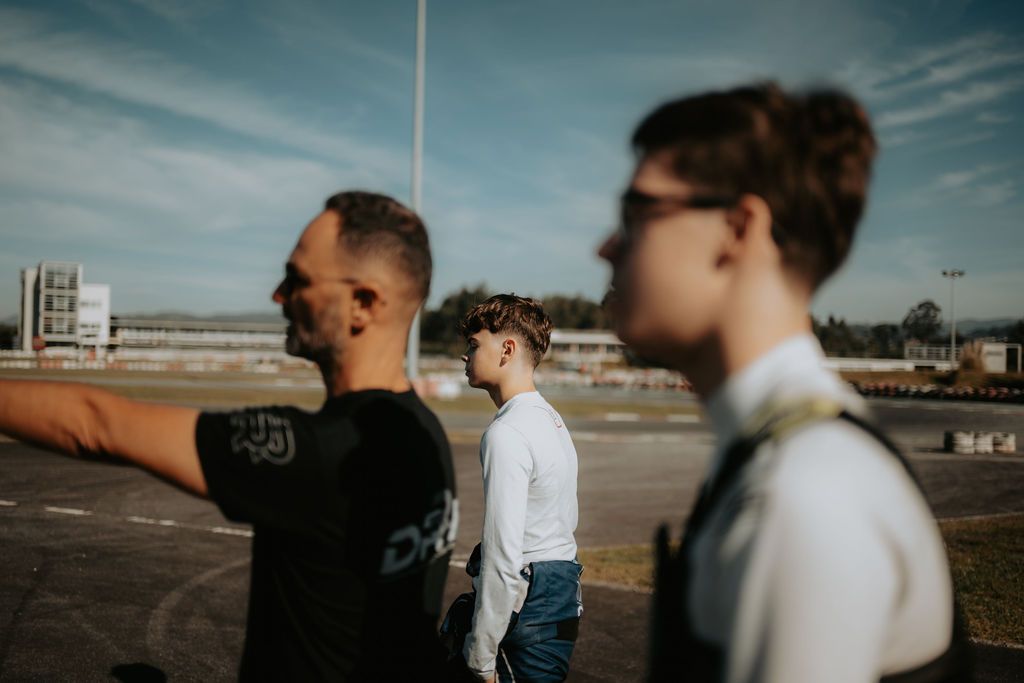
Hard on the body
Karting trains what few sports train at once: strength, endurance, reaction and a cool head. And the gains stay with you, whether or not you ever race.
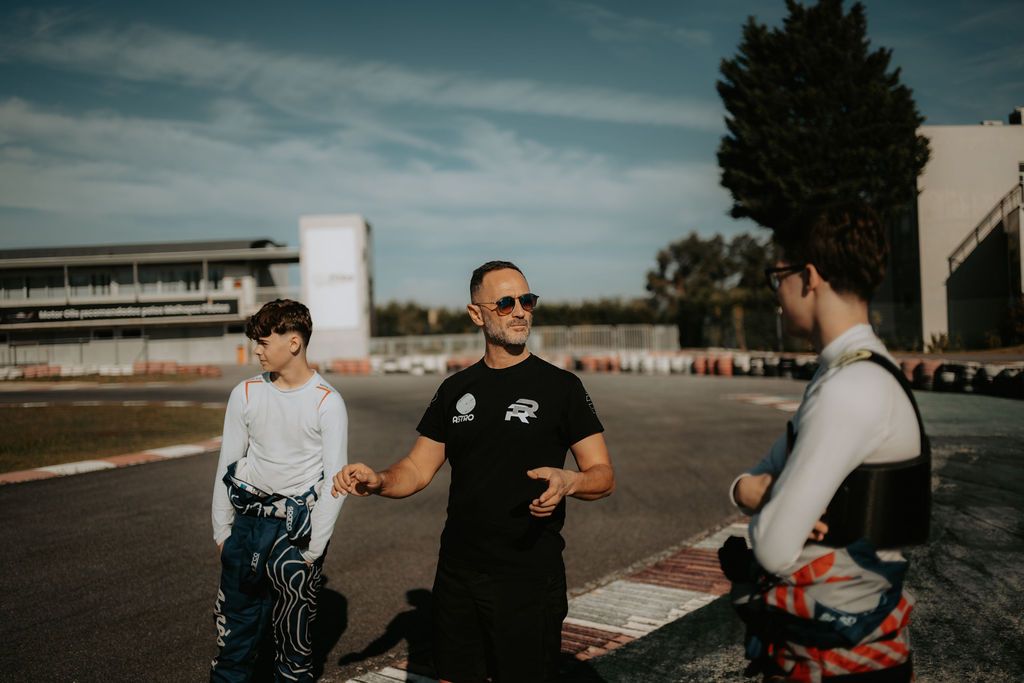
Source: Puhr-Westerheide et al. (2020), in-race ECG of professional kart drivers.
From age 4, with no upper limit. Those who arrive late usually arrive with more discipline than those who arrived early.
The method
Once, at the start. Revisited whenever something changes.
Baseline
Who you are, what you want, what you can already do. Plus a physical baseline: neck, core, heat, sleep and food. So progress is measured, not asserted.
Foundation
How a kart works, what each adjustment does, what the data records. Shorter at 50 than at 12, but never skipped.
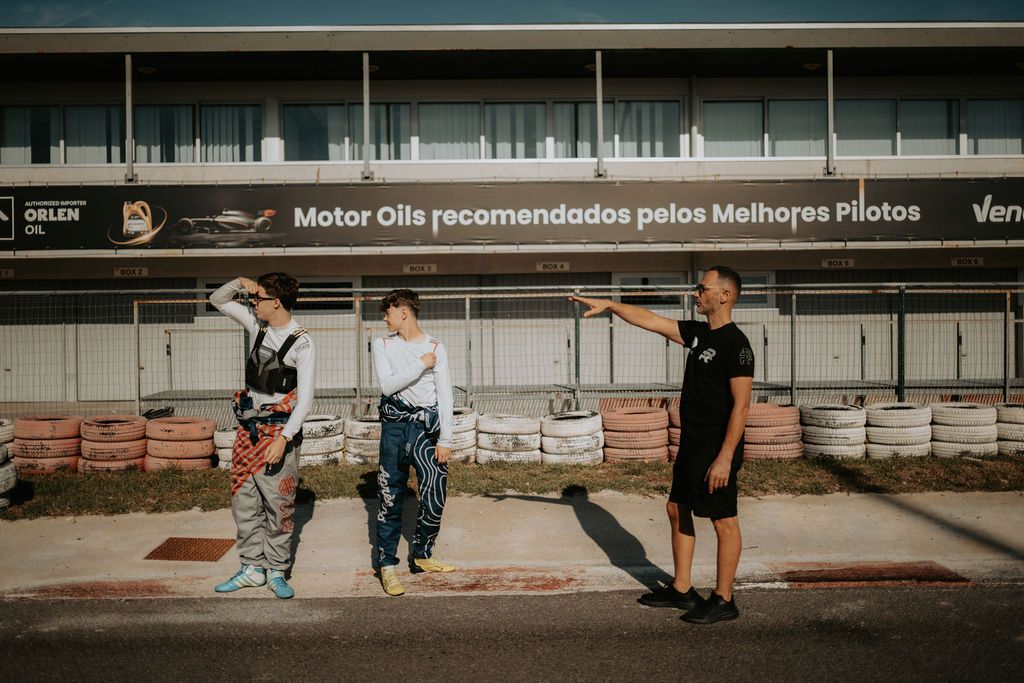
Phase 1 · Initiation
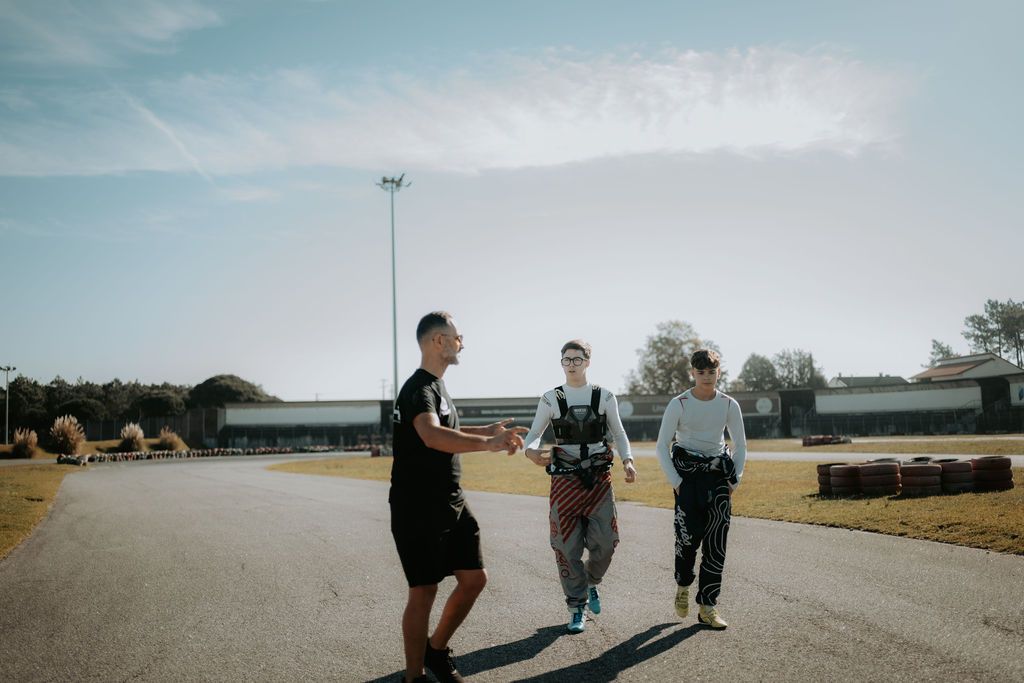
The Driver Training System was designed as an evolving path, following a driver’s development from their first contact with driving through to more advanced levels. In this first phase, initiation, the focus is on learning the fundamentals and building a solid foundation, both technical and behavioural.
The goal is not just to drive, but to understand karting as a discipline.
First steps
From the start, the Driver Training System gives its drivers a safe, controlled and educational environment, where the goal is not just to drive but to understand karting as a discipline. The first steps are about getting to know the kart: driving position, how the controls work (throttle, brake and steering) and the basics of track safety. It is essential that drivers learn early on rules such as respecting the flags, the importance of correct lines and sharing the track with other drivers.
The flags
The first language of the track.
Skills
Alongside this, the Driver Training System works on fundamental skills such as motor coordination, spatial awareness and reaction time. Simple exercises, sessions supervised by instructors and constant feedback are key at this stage.
The main goal here is not speed, but consistency, control of the kart and building confidence.
The mental side
Mistakes are part of the process.
Another important part of this phase is the introduction to the mental side of the sport. Even at the early levels, drivers start to develop discipline, focus and active listening. The Driver Training System encourages an attitude of continuous learning, where mistakes are seen as part of the process.
Objectives
In terms of objectives, this first phase makes sure the driver:
And then
This foundation is essential for everything that follows (the training loop and, for those who want it, racing), where the technical, physical and mental demands rise significantly. A well-structured initiation not only prepares drivers better, it also leads to faster, safer and more sustainable progress throughout their time in karting.
The loop, repeated indefinitely
Drive
Track time with a purpose set before the session. There is always a purpose.
Record
Times, video, telemetry. The session produces evidence, whether it went well or not.
Read
Delta against your own reference lap. In groups, every driver sits in on the others’ reviews.
Hone
One or two changes for the next session: technique, setup or physical work. Then back to Drive.
Always, alongside the loop: conditioning, nutrition, hydration and recovery.
Masterclasses
A guest driver, engineer, mechanic or physio, a few afternoons a season. Not a paid tier.
Speak for yourself
Learning to present what you do, approach a local business and keep a sponsor.
Racing (optional)
A door on the side, not the end of the system. You can run the loop for years and never race.
Data, data, data
Every kart we run carries telemetry (Alfano, MyChron and the like). Times, video, telemetry and your own reference lap decide what changes next. The delta is the only opponent that never flatters you.
Indicative mockup with simulated data. On track we use Alfano and MyChron.Drag across the charts to scrub through the lap.
Models
Pick the model that fits your life. The coaching is the same in all of them.
Already have a kart? Train with us on it. Maintenance is your call: we can do it, but we do not insist.
Coaching only
I want to improve →A second-hand DD2, rebuilt by Rui Filipe Taipas: chassis aligned and engine as good as new, ready to roll. Paid over a school year through our buy-now-pay-later partners. At the end, the kart is yours.
≈ €600/month × 10
Indicative: priced case by case, before any interest or fees from the instalment partner and subject to approval.
I want to improve →A race kart for a full year. Maintenance is on us; you pay for usage, meaning the consumables you burn on track.
On request
I want to improve →| Bring your own kart | Rent to own | Annual rental | |
|---|---|---|---|
| Who owns the kart | You | You, at the end | DRRH |
| Maintenance | Your choice (DRRH optional) | DRRH during the year | DRRH |
| Consumables | Driver | Driver | Driver |
DD2 ≈ 6,000 € ÷ 10 = ≈ 600 €/month
No small print
Tyres, fuel, oil, pistons, brake pads: everything that wears on track is paid for by the driver, whatever the model. A Rotax piston lasts about 25 hours and then has to be replaced. We would rather tell you now.
Pre-race used tyres
For training we use tyres that did the practice sessions of a race weekend. They work perfectly well for training and cost a fraction of the price.
| Consumable | Indicative price | Lasts about |
|---|---|---|
| Pre-race used tyres (set of 4) | ≈ €25 | ≈ 3 h |
| New Mojo D5 tyres (set of 4) | €180–€235 | ≈ 4 h |
| Rotax piston with ring | €95–€112 | ≈ 25 h |
| Petrol, 98 octane | ≈ €2.00/L | 5–6 L/h |
| Synthetic 2T oil (2% mix) | ≈ €25/L | ≈ 0.12 L/h |
| Brake pads (set) | ≈ €55 | ≈ 20 h |
| Chain and sprocket (Rotax Max only; the DD2 has no chain) | ≈ €45 | ≈ 15 h |
Not in the table: circuit fees, labour and engine rebuilds.
Work out your consumables cost
€255per month in consumables
€32 per track hour
Estimate based on European shop prices (Mondokart, Kartshop, Direct Karting) and 98-octane petrol in Portugal, Oct 2026. Consumption and lifespans are averages. Your pace changes everything.
Sign up
Tell us who is driving and what you are after. We will reply with dates and a plan to get started.